Service Demo Video
AI Computing Power Construction Service
1 System Overview
With the rapid iteration of artificial intelligence, big data, and deep learning technologies, AI computing power has become the core infrastructure for digital and intelligent transformation across all industries, and serves as the fundamental support for model training, intelligent inference, data analysis, and intelligent decision-making.
We provide one-stop AI computing cluster construction services, building dedicated AI computing foundations for enterprises and research institutions. Our services fully support the deployment of AI businesses such as large-model pre-training, parameter fine-tuning, intelligent inference, and multimodal generation, enabling you to launch AI projects quickly without having to delve into the underlying infrastructure.
We will tailor computing solutions based on your business objectives, model parameter scale, dataset size, and data security requirements. For large-model training scenarios, we prioritize high-bandwidth multi-GPU clusters; for business inference scenarios, we optimize node configuration to control latency and energy consumption, finding the optimal balance between performance and cost.
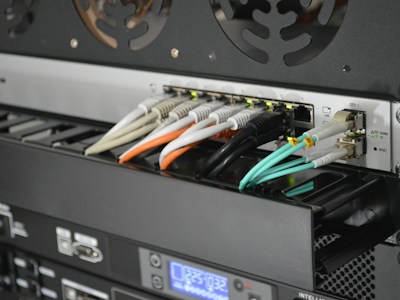
From hardware selection and procurement, computer room supporting renovation, and equipment racking and cabling, to high-speed RDMA network deployment and parallel storage setup, the entire process is implemented by our professional technical team. On the software side, we complete the deployment of the operating system, CUDA drivers, and container environments, build Kubernetes clusters and distributed training frameworks, and launch computing scheduling platforms, model repositories, and resource monitoring and alerting systems. After completing full-cluster joint debugging and testing, we deliver an environment that can run AI tasks directly.
The service offers two deployment models: local private deployment and co-location managed clusters. With private deployment, data remains within the customer's own environment, meeting classified and high-security business requirements; the managed hosting option can significantly shorten the construction cycle and reduce the early-stage investment in computer room supporting facilities.
After project delivery, our company provides 7×24 operation and maintenance support, including hardware inspection, environment and version upgrades, rapid fault handling, and system security hardening, as well as supporting subsequent elastic expansion of computing capacity. We provide a one-stop solution for AI computing infrastructure, saving you the high costs and trial-and-error risks of building an underlying technical team yourself, helping your AI innovation projects land quickly and seize the digital transformation opportunity in your industry.
2 Core Industries Suitable for AI Computing Construction
As the core foundation of intelligent transformation, AI computing power is broadly applicable to multiple industries, including industrial manufacturing, financial services, energy and mining, smart security, healthcare, retail and commerce, education and research, and emergency firefighting. By relying on dedicated computing platforms, each industry can achieve large-scale deployment of AI technologies, empowering industries to improve quality and efficiency, reduce costs and risks, and achieve intelligent upgrading.
2.1 Industrial Manufacturing
Traditional manufacturing faces challenges such as low production efficiency, large errors in manual quality inspection, frequent equipment failures, chaotic production scheduling, and severe energy waste. Through dedicated AI computing construction services, industrial intelligent computing clusters can be built to support the deployment of AI applications such as machine vision inspection, intelligent scheduling, equipment predictive maintenance, and production energy optimization. This achieves intelligent management and control of the entire production process, helping traditional factories transform into smart factories.
2.1.1 AI Visual Intelligent Quality Inspection for Industrial Products
Background: Traditional industrial product quality inspection generally relies on manual visual inspection. For categories such as precision components, electronic products, hardware products, and textile products, there are problems including low inspection efficiency, large errors from human fatigue, high miss rates for subtle defects, and inconsistent inspection standards. Small and medium-sized manufacturing enterprises may inspect tens of thousands of products per day; manual inspection not only requires substantial labor costs but also cannot accurately identify subtle defects such as scratches, dents, color differences, micro-cracks, and dimensional deviations, easily allowing non-conforming products to reach the market and causing after-sales disputes and brand damage. Meanwhile, manual inspection data cannot be accumulated and analyzed, making it difficult to optimize production processes. As manufacturing becomes more precise and standardized, industry requirements for inspection accuracy, efficiency, and stability have risen significantly, and traditional manual inspection can no longer meet production needs. There is an urgent need to rely on AI computing power to support the deployment of machine vision intelligent inspection systems, achieving fully automated, high-precision, and uninterrupted inspection.
Equipment application and computing deployment process: Our company builds a dedicated edge + cloud hybrid AI computing platform for manufacturing enterprises. High-definition industrial cameras and image acquisition equipment are deployed at the front end to collect high-definition image data from the production line in real time. Edge computing nodes handle real-time image pre-processing and preliminary defect identification, while cloud computing clusters carry out deep learning model training, precise defect determination, and data aggregation and analysis. First, relying on the high-performance computing cluster, dedicated industrial inspection AI models are trained based on the enterprise's massive historical inspection data and product defect sample data. Through the high-speed iterative capability of computing power, model recognition accuracy is continuously optimized to adapt to the recognition needs of different products and defect types. During production, when products on the line pass through inspection stations, industrial cameras capture all-round product images within milliseconds and transmit them to edge computing devices, which perform real-time denoising, cropping, and feature extraction, quickly compare against the model database, and accurately determine whether a product has defects, locate defect positions, and distinguish defect types. For routine defects, the edge computing layer directly completes determination and issues sorting instructions; for subtle and difficult defects, they are uploaded to the cloud computing cluster for secondary precise analysis and determination, ensuring zero missed detections and zero false detections. At the same time, the computing platform accumulates all inspection data in real time, automatically counts defect types, defect probabilities, and high-frequency defect stations, providing data support for production process optimization.
Value: Once this computing solution is deployed, it enables 24-hour uninterrupted intelligent inspection of the production line, with inspection efficiency improved by more than 10 times compared to manual inspection and product defect recognition accuracy reaching 99.8%, thoroughly eliminating missed detections and false detections caused by human fatigue. Through inspection data analysis, production processes can be optimized in reverse, reducing product defect rates and improving product qualification rates and market competitiveness, helping enterprises achieve intelligent upgrading of the production stage.
2.1.2 Predictive Intelligent Maintenance of Industrial Equipment
Background: Industrial production lines contain a large number of precision production equipment such as machine tools, conveyor belts, air compressors, and robots. The traditional equipment maintenance model is “scheduled maintenance + breakdown repair”. Scheduled maintenance has problems of over-maintenance and untimely maintenance, wasting labor and resources; breakdown repair is often carried out after equipment shutdown failures, directly causing production line stoppages, capacity loss, and order delays, seriously affecting enterprise production efficiency. Under the traditional model, equipment operating status cannot be monitored in real time and potential failures cannot be predicted; subtle abnormal data such as equipment vibration, temperature, speed, and noise are difficult to capture and analyze accurately, and small hidden problems accumulated over time can easily trigger major equipment failures, increasing maintenance costs and downtime losses. In the current context of smart manufacturing, enterprises urgently need intelligent means to achieve early prediction and precise maintenance of equipment failures and ensure stable production line operation, which requires high-performance AI computing power to support real-time analysis of equipment data and intelligent prediction.
Equipment application and computing deployment process: Our company builds a distributed AI computing cluster for the enterprise, adapted to the real-time processing of massive time-series data from industrial equipment and AI model inference requirements. First, IoT sensors for temperature, vibration, speed, current, and noise are deployed on various production equipment to collect all-dimensional equipment operating data around the clock, with data transmitted in real time to the dedicated computing platform. Relying on the high-speed computing capability of the cluster, equipment failure prediction AI models are run to clean, analyze, and extract features from massive real-time data, accurately identify abnormal equipment operating characteristics, compare against historical failure data models, and predict potential equipment failure types, failure occurrence times, and the scope of failure impact. Based on prediction results, the computing platform automatically generates optimal maintenance plans, precisely informing staff of fault locations, maintenance methods, and maintenance cycles, while intelligently assessing equipment operating wear and component aging levels. For minor equipment abnormalities, the platform automatically issues warnings to remind staff to conduct timely investigation; for high-risk potential failures, it directly triggers emergency alerts and links with production line control systems to implement protective measures, avoiding sudden shutdowns. At the same time, the computing platform continuously accumulates equipment operating and maintenance data, iteratively optimizes prediction models, and continuously improves the accuracy of failure prediction.
Scenario value: By empowering equipment predictive maintenance with AI computing power, the traditional passive maintenance model is thoroughly transformed, achieving early prediction and precise maintenance of equipment failures, with the sudden equipment shutdown failure rate reduced by more than 90%, greatly reducing production line stoppage losses. Precise maintenance plans avoid resource waste caused by over-maintenance, reduce equipment maintenance costs and component wear, and extend equipment service life. Meanwhile, the computing platform realizes visualized and intelligent management of equipment operation and maintenance data, helping enterprises establish standardized equipment operation and maintenance systems, ensuring efficient, stable, and continuous production line operation, and effectively improving enterprise capacity and production stability.
2.2 Financial Services
The financial industry covers sub-fields such as banking, insurance, securities, and internet finance, characterized by large data volumes, high real-time requirements, strict risk control, and strong compliance requirements. Traditional financial businesses face pain points including low credit review efficiency, many risk control loopholes, poor fraud identification accuracy, lagging customer service, and low data analysis efficiency. AI computing construction can support the deployment of AI applications such as intelligent financial risk control, intelligent credit review, intelligent investment advisory, financial data analysis, and intelligent customer service, helping financial institutions achieve business intelligence, refined risk control, and efficient service upgrading.
2.2.1 Intelligent Credit Review and Risk Control for Financial Lending
Background: Traditional credit review models of banks, rural credit cooperatives, and small loan institutions are mainly manual. Reviewers must check one by one massive amounts of customer credit information, income proof, asset information, transaction statements, credit reports, and other materials. The review process is cumbersome and time-consuming, with a single credit review taking as long as 1–3 working days, resulting in a poor customer experience. At the same time, manual review relies on staff experience and has relatively large subjective judgment errors, making it difficult to accurately identify hidden credit risks and prone to malicious fraud lending, overdue bad debts, and other problems that cause financial losses for institutions. In addition, the traditional review model cannot perform batch analysis of massive customer data, making it difficult to adapt to the batch credit business needs of inclusive finance, and business expansion efficiency is extremely low. As financial digital transformation accelerates, the industry urgently needs to build intelligent review systems based on AI computing power to achieve automated credit review, precise risk determination, and efficient business processing.
Equipment application and computing deployment process: Our company builds a localized dedicated AI computing cluster for financial institutions, balancing computing performance with data security and compliance, avoiding public cloud data leakage risks and high computing cost consumption. The computing platform connects to the financial institution's core business systems, credit systems, and transaction systems, and can capture multidimensional massive data such as customer basic information, credit data, capital flows, consumption behavior, and repayment records in real time. Relying on high-performance computing resources, financial credit risk control large models are run to clean, model, analyze, and rate all customer-dimension data within milliseconds, quickly building customer credit profiles. In the review stage, the computing platform automatically verifies the authenticity of customer materials, identifies problems such as material fraud and abnormal information, accurately determines customer credit ratings, credit limits, and overdue risks, and automatically generates review results and risk control reports. For ordinary small-amount credit business, fully automated review can be achieved with results produced within seconds; for large-amount credit business, intelligent preliminary review is completed, providing precise data support for manual re-review and greatly simplifying the review process. At the same time, the computing platform can iterate risk control models in real time, optimizing algorithms in combination with the latest credit cases, fraud methods, and overdue data, continuously improving risk identification accuracy and avoiding new credit risks.
Value: The intelligent credit review system empowered by computing power compresses the traditional multi-day review cycle to 1–2 minutes, improving review efficiency by more than 100 times, greatly optimizing the customer experience and helping financial institutions increase business volume and market competitiveness. Intelligent risk control models raise credit risk identification accuracy from 70% under the traditional approach to more than 95%, greatly reducing fraud lending, overdue, and bad debt risks and reducing capital losses. Localized computing deployment fully meets financial data compliance requirements, safeguarding customer financial data security, while batch processing capability can support inclusive finance batch credit business, helping financial institutions efficiently expand into lower-tier markets and achieve business growth.
2.2.2 Intelligent Risk Control and Anti-Fraud Identification for Financial Transactions
Background: At present, online financial transactions, transfers, and payment businesses continue to surge in scale, and financial risks such as telecom fraud, money laundering, false transactions, and abnormal cash-out are emerging one after another, with increasingly concealed and complex fraud methods. Traditional financial risk control systems rely on fixed rule-based determination and can only identify routine abnormal transactions, unable to accurately identify new and concealed fraudulent transactions, leaving numerous risk control loopholes. Meanwhile, financial transactions feature high concurrency and high real-time requirements, with daily transaction data reaching billions of records. Traditional computing equipment cannot achieve real-time monitoring, analysis, and alerting of massive transaction data; abnormal transaction detection lags behind, and problems can often only be traced after capital loss, making it impossible to intercept risks in advance and causing irreversible capital losses for users and financial institutions. There is an urgent need for high-performance AI computing power to support real-time intelligent risk control systems, achieving real-time identification, precise interception, and early warning of transaction risks.
Equipment application and computing deployment process: Our company builds a financial-exclusive AI computing cluster with high concurrency and low latency, adapted to millisecond-level real-time processing of financial transactions and supporting synchronized analysis and processing of hundreds of thousands of transaction records per second. The computing platform connects in real time to payment transaction systems and user account systems, dynamically capturing all-dimensional data of each transaction including transaction time, transaction amount, transaction location, device information, transaction frequency, counterparty accounts, and user behavior habits. Relying on the high-speed inference capability of computing power, AI models for financial anti-fraud and abnormal transaction identification are run to compare in real time against user historical transaction behavior and routine transaction habits, accurately identifying risk scenarios such as abnormal cross-region transfers, high-frequency small-amount cash-out, unfamiliar large-amount transactions, abnormal nighttime transactions, and suspected money-laundering diversion transactions. Once a risky transaction is identified, the computing platform immediately triggers alerts, automatically intercepts the transaction and freezes abnormal accounts, and pushes risk information to risk control staff simultaneously. At the same time, the computing cluster continuously learns the latest fraud cases and abnormal transaction patterns, dynamically iterates model algorithms, and adapts to new financial fraud methods, filling the loopholes of traditional rule-based risk control. In addition, the platform can conduct batch post-review analysis of daily transaction data, summarize risk transaction characteristics, and output risk control optimization reports, helping financial institutions improve their risk control systems.
Value: This computing solution achieves full-volume, real-time, intelligent risk control of financial transactions, with abnormal transaction identification response speed reaching the millisecond level and a risk interception success rate improved by 98%, effectively curbing various financial risks such as telecom fraud, money laundering, and cash-out, and safeguarding user capital security and financial institution operational security. High-concurrency computing supports the system in smoothly handling transaction peaks and holiday peak traffic without jamming, delay, or crashes, ensuring stable operation of financial businesses. At the same time, intelligent risk control greatly reduces manual risk control workload, lowers risk control labor costs, and improves the refinement and intelligence level of financial institution risk control.
2.3 Energy and Mining
The energy and mining industry includes sub-fields such as coal mining, oil and gas, electric power, and new energy. Its operating scenarios are complex, with harsh environments, high safety risks, and difficult operation and maintenance. Traditional operating models face pain points such as low inspection efficiency, untimely hidden danger investigation, high production energy consumption, and high equipment failure rates. AI computing construction can support the deployment of scenarios such as intelligent mine inspection, hidden danger identification, intelligent oil and gas extraction, intelligent grid dispatching, and new energy power forecasting, empowering the energy and mining industry to achieve safe production, cost reduction and efficiency improvement, and intelligent upgrading.
2.3.1 Intelligent Safety Inspection and Hidden Danger Identification in Underground Coal Mines
Background: Traditional underground coal mine inspection relies on manual underground operations. Underground environments involve multiple safety hazards such as gas leakage, roof collapse, water accumulation and sludge, foreign objects blocking roadways, and equipment failures. Manual inspection carries extremely high risks, and with complex underground roadways and wide inspection coverage, manual inspection is time-consuming and inefficient, making it difficult to achieve full-area, all-round, no-blind-spot inspection. At the same time, manual inspection suffers from high subjectivity and high miss rates; subtle abnormal gas concentrations, equipment aging, and roadway cracks cannot be detected in time, and accumulated over time can easily trigger major safety accidents, seriously threatening the lives of underground workers and the safety of mine production. In addition, manual inspection data cannot be aggregated and analyzed in real time, making it difficult to achieve early prediction and precise treatment of hidden dangers. There is an urgent need to rely on AI computing power to build an underground intelligent inspection system that replaces manual work for high-risk inspection tasks.
Equipment application and computing deployment process: Our company builds a mining-exclusive AI computing cluster for mining enterprises, adapted to data transmission and AI identification needs in complex underground environments while balancing explosion-proof, stability, and low-power characteristics. The project deploys underground explosion-proof cameras, inspection robots, gas sensors, temperature sensors, and other equipment to comprehensively collect data such as underground roadway images, gas concentrations, ambient temperatures, and equipment operating status, transmitted through dedicated mine networks in real time to the surface AI computing platform. The computing cluster is equipped with mine-exclusive intelligent identification large models. Relying on powerful computing capability, it performs real-time analysis and processing of live images and sensor data, accurately identifying more than ten categories of hidden dangers such as coal accumulation, foreign objects on tracks, roof cracks, excessive gas, water and sludge accumulation, equipment abnormalities, and illegal operations. For routine hazards, the platform issues real-time pop-up alerts and voice broadcasts, pushing hazard locations and rectification suggestions; for high-risk hazards such as excessive gas and abnormal roofs, it immediately triggers emergency alerts, links with underground audible and visual alarm devices to remind workers to evacuate urgently, and links with equipment control systems to shut down related operating equipment. At the same time, the computing platform records inspection data continuously 24 hours a day, automatically counts high-incidence hazard areas and types, forms a hazard treatment ledger, provides data support for mine safety management, roadway rectification, and equipment maintenance, and continuously iterates and optimizes identification models to improve the accuracy of hidden danger investigation.
Value: The intelligent inspection system empowered by AI computing power thoroughly replaces manual high-risk underground inspection operations, fundamentally reducing underground operation safety risks and eliminating safety accidents caused by manual inspection. 24-hour uninterrupted intelligent inspection achieves full-area, no-blind-spot hidden danger investigation underground, reducing the hidden danger miss rate to zero and improving hidden danger detection and handling efficiency by more than 90%, effectively avoiding major mine safety accidents. At the same time, the intelligent data ledger helps mines achieve standardized, refined, and intelligent safety management, reducing safety management costs and improving mine safety production levels and production efficiency.
2.3.2 Intelligent Inspection and Load Dispatching of Power Grids
Background: Traditional power grid operation and maintenance relies on manual inspection and manual dispatching. Power grids include massive facilities such as transmission lines, substations, transformers, and distribution equipment, with wide coverage and scattered regional distribution, making inspection of mountain and field lines extremely difficult. Manual inspection is inefficient and time-consuming, and it is difficult to promptly detect problems such as line damage, insulator failures, equipment aging, and tree-related hazards, which can easily lead to line tripping and power outage accidents. At the same time, traditional grid load dispatching relies on manual experience for prediction and cannot precisely match load changes during power consumption peaks and valleys, resulting in insufficient supply redundancy, uneven load distribution, and energy waste, and making it difficult to adapt to the dynamic dispatching needs of power grids after new energy grid integration. There is an urgent need for AI computing power to support intelligent grid operation, maintenance, and dispatching.
Equipment application and computing deployment process: Our company builds a low-latency, high-stability power-exclusive AI computing platform to support real-time analysis of massive grid equipment data and power consumption data and intelligent dispatching. At the front end, drones, high-definition cameras, and power sensing equipment collect all-dimensional data on operating images, temperature, current, and voltage of transmission lines, substations, and distribution equipment, uploaded in real time to the computing cluster. The computing platform runs power grid intelligent inspection AI models to automatically identify fault hazards such as line strand breakage, equipment damage, tree coverage, insulator contamination, and abnormal equipment heating, accurately locate fault points, assess fault levels, and automatically generate inspection reports and rectification plans. In terms of load dispatching, the computing platform aggregates grid-wide power consumption data, meteorological data, new energy power generation data, and historical power consumption peak data, and through big data analysis and AI algorithm modeling, accurately predicts regional power load change trends, dynamically optimizes grid load distribution strategies, and intelligently adjusts transmission, distribution, and supply power to achieve grid load balancing. Given the intermittent power generation characteristics of wind and photovoltaic new energy, the computing platform predicts generation power in real time, optimizes new energy grid integration dispatching plans, improves the new energy consumption rate, and ensures stable, efficient, and energy-saving grid power supply.
Value: Computing-empowered intelligent grid operation and maintenance achieves automatic identification and early warning of grid equipment failures, with troubleshooting efficiency improved by more than 80%, greatly reducing the probability of grid fault tripping and power outages and improving power supply reliability. Intelligent load dispatching thoroughly solves the traditional problems of low manual dispatching accuracy and energy waste, greatly improving grid resource utilization and significantly enhancing new energy consumption capacity, effectively reducing grid operation energy consumption and operation and maintenance costs, and helping the new-type power system achieve intelligent and green upgrading.
2.4 Smart Retail
The smart retail industry includes scenarios such as offline supermarkets, chain stores, and e-commerce platforms, with core pain points concentrated on lagging customer traffic analysis, chaotic inventory management, low marketing precision, and slow supply chain response. AI computing construction can support the deployment of AI applications such as intelligent customer traffic analysis, intelligent inventory management, precision marketing push, and intelligent supply chain forecasting, achieving intelligent management and control of the entire “people, goods, and places” chain, improving retail operation efficiency and revenue conversion.
2.4.1 Intelligent Customer Traffic Analysis and Precision Marketing for Supermarkets and Stores
Background: Marketing and operations of traditional supermarkets and chain stores rely on manual experience and cannot precisely grasp core data such as store customer traffic patterns, customer consumption preferences, and product attention levels. Peak and valley periods of store customer traffic cannot be predicted accurately, leading to unreasonable staff scheduling and wasted service resources; consumption needs of different customer groups cannot be identified, marketing activities are carried out blindly, promotion investment costs are high, and conversion effects are poor; at the same time, data such as customer walking routes and product dwell time cannot be quantitatively analyzed, and store display layout optimization lacks data support, seriously affecting store operating efficiency and revenue conversion. Traditional data statistics can only achieve after-the-fact data aggregation and cannot achieve real-time analysis and dynamic optimization, so there is an urgent need for AI computing power to support real-time customer traffic sensing and intelligent marketing decisions.
Equipment application and computing deployment process: Our company builds an edge + cloud collaborative AI computing system for retail enterprises, adapted to the lightweight, multi-node, real-time computing needs of stores. Smart cameras and customer traffic collection equipment are deployed at the front end of each store to collect in real time all-dimensional data such as store customer traffic volume, entry and exit time periods, customer walking routes, product dwell time, customer age and gender, and consumption behavior. Edge computing nodes complete real-time data desensitization, pre-processing, and preliminary analysis, while cloud computing clusters carry out big data aggregation, model training, trend forecasting, and marketing decision functions. Through AI visual analysis algorithms, the computing platform generates store customer traffic heatmaps and customer traffic time-distribution charts in real time, accurately identifies daily customer traffic peak and valley periods, and provides real-time data support for store staff scheduling and service allocation. At the same time, relying on massive customer traffic and consumption data, user profile models are trained to accurately analyze the consumption preferences, popular products, and consumption habits of different customer groups, automatically identifying slow-moving products and best-selling products in stores. Based on analysis results, the computing platform dynamically outputs store display optimization plans, promotional activity plans, and product combination plans, and links with store electronic price tags and intelligent push devices to achieve precise pricing and targeted promotions. In addition, the platform can aggregate data from national chain stores, complete predictions of overall customer traffic and consumption trends, and provide support for the formulation of overall corporate marketing strategies.
Value: Computing-empowered real-time quantitative analysis of store customer traffic and consumption data thoroughly escapes the manual-experience operation model, making store staff scheduling and resource allocation more reasonable and significantly improving service efficiency. Precise user profiles and marketing plans greatly improve promotion conversion rates, reduce blind marketing costs, and increase store revenue by more than 15%. Intelligent display optimization and product analysis effectively reduce slow-moving product problems, improve product turnover efficiency, and achieve refined and intelligent operation management of retail stores.
2.4.2 Intelligent Supply Chain Forecasting and Inventory Control in Retail
Background: Supply chain and inventory management are the core operational difficulties of the retail industry. Traditional inventory management relies on manual inventory counting and experience-based purchasing volume prediction, leading to problems such as inventory overstock, out-of-stock and stockouts, and severe inventory losses. Sales fluctuate greatly during holidays, seasonal transitions, and promotional periods; manual methods cannot accurately predict market demand, easily leading to missed revenue from out-of-stock best-selling products and capital and storage space occupied by slow-moving overstocked products. At the same time, inventory data of national chain stores and multiple warehouses cannot be synchronized in real time, supply chain replenishment and transfer responses lag, inventory counting efficiency is low with large errors, and inventory control costs remain high, seriously affecting the supply chain operation efficiency and profitability of retail enterprises. There is an urgent need for AI computing power to support intelligent analysis and precise forecasting of massive sales data, inventory data, and market data.
Equipment application and computing deployment process: Our company builds a retail-exclusive cloud computing cluster with massive data storage, high-speed computing, and intelligent forecasting capabilities, connecting to enterprise sales systems, inventory systems, and supply chain management systems, aggregating multidimensional massive information such as daily sales data, inventory data, warehousing data, logistics data, market price data, seasonal data, and promotional data of national stores. Relying on the powerful data analysis and model iteration capability of computing power, supply chain sales forecasting AI models are trained to analyze in real time historical sales patterns, market fluctuation trends, seasonal effects, and promotional effects, accurately predict short-term and medium-term sales of products in each store and category, and automatically generate accurate purchase plans, replenishment plans, and transfer plans. In inventory control, the computing platform synchronizes inventory data of stores and warehouses in real time, automatically counts inventory levels, identifies soon-to-expire products, overstocked products, and out-of-stock products, and intelligently pushes inventory alerts, clearance handling, and emergency replenishment reminders. At the same time, for perishable products such as fresh food and fast-moving consumer goods, the platform analyzes product loss patterns through computing power, optimizes inventory storage, turnover, and replenishment strategies, and reduces product loss rates. The platform supports collaborative dispatching of inventory across multiple stores and warehouses, achieving optimized allocation of national inventory resources and improving supply chain response efficiency.
Value: AI computing empowers intelligent supply chain and inventory management, raising product sales forecasting accuracy to more than 95%, thoroughly solving out-of-stock and overstock problems, effectively activating enterprise inventory capital, and reducing warehousing and loss costs. Fully automated inventory data analysis, counting, and alerting greatly reduce manual inventory management workload and improve the accuracy and efficiency of inventory control. Intelligent supply chain dispatching achieves precise source matching and rapid replenishment, shortens supply chain response cycles, improves the overall supply chain operation efficiency and market adaptability of enterprises, and helps retail enterprises reduce costs and improve efficiency.
Thông số kỹ thuật
Tính năng chính
- 1. One-stop full-process delivery: covering hardware procurement, computer room renovation, high-speed networking, storage deployment, underlying software, computing power platform construction and cluster joint commissioning. The entire infrastructure and AI operating environment can be implemented in one go. Enterprises do not need to delve into underlying infrastructure and can quickly launch AI projects.
- 2. Customized computing power solution design: Planning is tailored to business objectives, model scale, data volume and security requirements. It differentiates between large model training (high-bandwidth multi-GPU) and inference scenarios (low latency and energy consumption control), balancing performance and cost.
- 3. Full-scenario AI computing power support capability: A dedicated AI computing base is built to support the implementation of various AI businesses including large model pre-training, parameter fine-tuning, intelligent inference and multimodal generation.
- 4. Dual deployment modes for data security: Supports on-premises private deployment (data remains in-house, suitable for high-security scenarios such as confidential work) and colocation cluster solutions, enabling flexible trade-offs between construction cycle and upfront investment costs.